
One of the most important parts of any vehicle is its glass, as it directly affects the driver’s visibility. Whether we like it or not, car windows — especially the windscreen — can become chipped, scratched, or cracked due to various factors such as flying gravel on the road.
Many of these cracks and chips are small at first but tend to spread over time. Early detection allows you to repair them before they worsen. In this article from ProCarGlass, we’ll highlight simple ways to spot these small cracks at home.
Why Early Detection of Car Glass Damage Matters
Even the tiniest chip or crack can impact the driver’s view and overall safety. What starts as a two-millimetre scratch can quickly spread due to temperature changes, vehicle vibration, or moisture seeping in.
Early detection helps you:
• Prevent larger cracks: Minor damage is usually repairable at a fraction of the cost of a full replacement.
• Maintain clear visibility: A clean, crack-free windscreen provides better visibility and safer driving.
• Avoid legal issues: In many countries, cracks within the driver’s field of vision can cause a vehicle to fail its roadworthiness test.
• Preserve vehicle integrity: The windscreen provides up to 30% of a car’s structural strength during a collision.
Steps to Inspect Your Car Glass at Home
- Choose the right time and lighting
The best time to inspect your car’s glass is during the day but away from direct sunlight. Bright sunlight can make tiny cracks harder to see. The ideal setting is a shaded or enclosed area with white lamp light or a torch to help you spot and examine small cracks. - Clean the glass thoroughly
Dust and dirt can conceal tiny cracks. Before inspecting, wipe the glass clean with a cloth and a suitable cleaner to ensure no debris hides the damage. - Examine the glass carefully
Start from the edges and move toward the centre. Look for:
• Small round chips or pits (usually from gravel impact)
• Hairline or fine cracks branching from an impact point
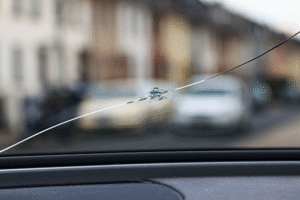
• Star-shaped or circular cracks caused by direct hits
• Surface wear or scattered scratches from dust and road grit - Use your fingertip to feel the surface
Gently run your finger over the glass. If you notice roughness, a small dent, or a sharp edge, the surface may have a chip or minor flake. - Check for distortion or warping
View the glass from different angles. If the image behind it looks bent or blurry, there may be an internal crack or weakness in the laminated layers.
Types of Minor Car Glass Damage
- Surface chip or scratch
This type of damage affects only the surface and doesn’t penetrate the inner layer. It can often be fixed by injecting repair resin. - Star break
Several small cracks radiate from the point of impact. If the total diameter is smaller than a coin, it’s generally repairable. - Bull’s-eye crack
This appears as a circular mark with a dark centre, often caused by a direct hit from a stone or hard object. Timely repair can prevent it from spreading. - Combination damage
A mix of star and bull’s-eye cracks, which can expand quickly. Such cases should always be inspected by a specialist.
Common Causes of Minor Car Glass Damage
Understanding what causes the damage helps you prevent it from happening again:
• High-speed impact from gravel or road debris
• Sudden temperature changes (for example, pouring hot water on a frozen windscreen)
• Using unsuitable tools for cleaning the glass
• Excessive pressure when closing doors or body impact
• Poor-quality glass or old, deteriorated sealant
When to Call a Professional Technician
Even if the damage looks minor, some situations require expert assessment. You should contact a professional car glass technician if:
- The crack or chip is larger than a coin
Cracks over 25mm usually can’t be safely repaired and may weaken the glass. - The damage is in the driver’s line of sight
Even tiny cracks can cause glare or visual distortion. In this case, replacing the windscreen is the safer choice. - The crack is near the glass edge
Cracks near the edge spread more quickly and generally require full replacement. - There are multiple or deep cracks
If you can feel the crack with your fingernail, or both glass layers are damaged, see a specialist immediately. - A previous repair has failed
DIY repair kits can help with very small chips, but improper application can trap air and moisture inside the crack. Professionals use vacuum systems and specialised resin to ensure flawless results.
Home Repair vs Professional Repair
- DIY Repair: Suitable for very fine cracks, low-cost, but limited in strength and durability.
• Professional Repair: Technicians use high-quality resin, UV curing equipment, and precision tools to restore the glass’s original strength.
In modern vehicles, safety systems like ADAS cameras and sensors often need recalibration after repair — a process only qualified professionals can perform.
Tips to Prevent Car Glass Damage
- Keep a safe distance from lorries or trucks carrying gravel or sand.
• Avoid sudden temperature shocks to the glass.
• Replace worn wiper blades promptly.
• Park in shaded or covered areas during extreme heat or cold.
• Check the glass condition before long journeys.
Conclusion
At first glance, small cracks or scratches on your car glass might seem insignificant. However, over time and under various conditions, they can spread and compromise your safety. Early detection and repair not only prevent further damage but also save you from unnecessary costs. Repairing minor cracks is always far cheaper — and safer — than replacing the entire windscreen.