
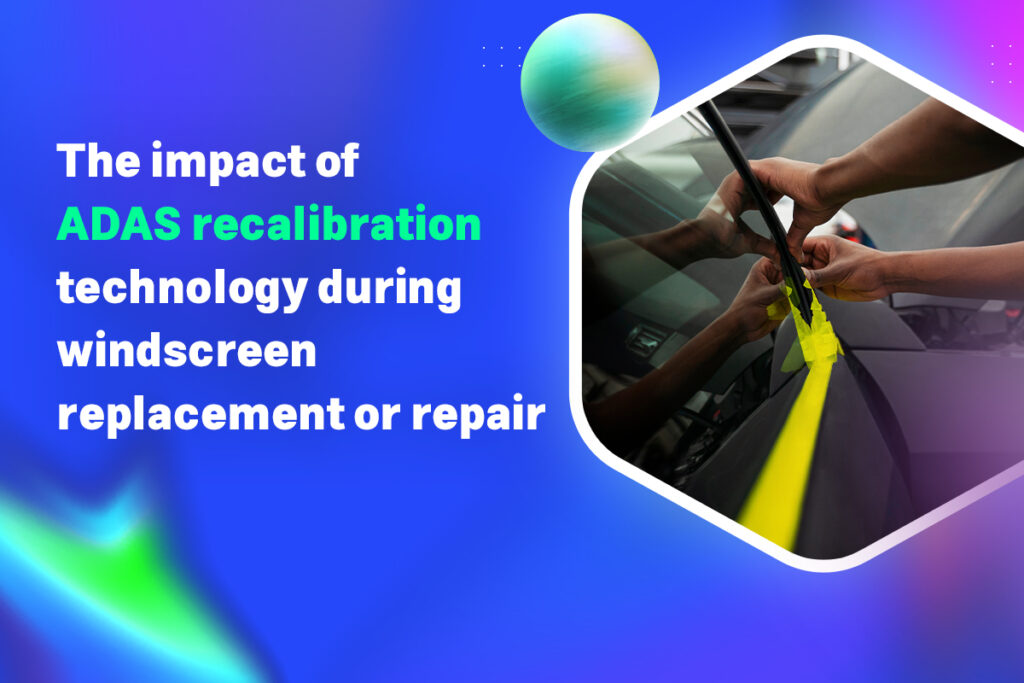
What makes a car truly good — high speed, powerful engines, or numerous options? In fact, the most important feature of an ideal vehicle is safety, ensuring the protection of both passengers and pedestrians. One of the safety systems that is now widely installed in most modern vehicles is the Advanced Driver Assistance System (ADAS). Using cameras, radars, lidars, and various sensors, this system plays a vital role in detecting lane markings, recognising traffic signs, and maintaining safe distances.
The Importance of ADAS and Its Calibration During Windscreen Replacement
Numerous sensors are mounted on the windscreen, and when a windscreen is repaired or replaced, it directly affects the performance of those sensors. If the ADAS calibration is not carried out accurately and correctly, it can lead to various issues for both the car and the driver.
Consequences of Not Calibrating ADAS
When a car’s windscreen is repaired or replaced, the position and alignment of the cameras and sensors may shift. Even a slight deviation in the angle — as small as a few degrees — can cause significant errors.
- Many ADAS functions such as lane departure warning, automatic braking, traffic sign recognition, and pedestrian detection rely heavily on the precise positioning of the mounted cameras.
- Industry reports indicate that replacing windscreens significantly increases repair costs because recalibration is mandatory afterwards. This process requires specialised tools and technical expertise.
- Moreover, many body or glass repair workshops lack the training or proper equipment for ADAS calibration, leading to vehicles being returned without properly adjusted safety systems.
The Importance of Recalibration During Windscreen Replacement or Repair
When a car equipped with ADAS undergoes windscreen replacement or repair, the process is no longer a simple component swap; it must be treated as part of a comprehensive procedure that ensures the vehicle’s safety systems continue to operate as the manufacturer intended. There are several key aspects to consider:
- Technical Accuracy and Sensor Positioning
ADAS cameras and sensors are usually mounted at the top of the windscreen or behind the rear-view mirror. Any change in their angle or position directly affects system performance.
Many technical documents note that incorrect alignment can trigger warnings or even cause the ADAS to shut down automatically. - Industry Standards and Regulations
According to technical documentation, windscreen replacement in vehicles equipped with ADAS must include recalibration to ensure that sensor positioning is restored to factory condition.
Insurance and body repair guidelines also show that the associated costs are considerably higher than for vehicles without ADAS. - Economic and Safety Implications
If recalibration is neglected, not only may the safety systems fail to perform correctly, but from an insurance and liability perspective, both the owner and the technician could face potential risks.
In the glass repair industry, there is an increasing tendency to repair rather than replace windscreens, as repairs often do not require recalibration and are faster and more affordable.
Best Practices to Ensure Proper ADAS Functionality After Windscreen Replacement or Repair
Given the importance of the issue, technicians, glass specialists, and owners of vehicles equipped with ADAS should pay close attention to the following points:
- Use of OEM-Spec Glass: One of the main factors influencing ADAS performance is the optical quality of the windscreen. Research shows that aftermarket glass may alter light transmission, refraction, or lens distortion, thereby reducing the accuracy of intelligent vision systems.
- Ensure Calibration Is Performed by Trained Professionals: Many glass repair companies confirm that ADAS calibration requires specialised equipment and training. Without these, there is a high risk of returning the vehicle with system defects.
- Post-Installation Verification: After replacement or repair, the ADAS functions — particularly camera-dependent ones such as lane detection, traffic sign recognition, and emergency braking — should be tested. Any dashboard warnings or error messages must be checked.
- Keep Calibration Records for Insurance and Future Maintenance: Insurance companies and vehicle manufacturers often require official documentation proving calibration in order to validate the windscreen repair or replacement.
Conclusion
In conclusion, the significance of ADAS technology and its role in enhancing vehicle safety is undeniable. However, the optimal performance of these systems depends on precise sensor installation and accurate recalibration after any windscreen repair or replacement. Ignoring this essential step can result in unreliable safety systems, increased error potential, reduced occupant safety, and even legal risks for both the vehicle owner and the technician.
At Procarglass, we pay close attention to every aspect of ADAS calibration during windscreen replacement to ensure your vehicle remains safe and reliable. For windscreen repair or replacement, contact us today.